 Aura Stone
Why Do Some Stones Sweat or Show Condensation?
What “Sweating” Means on the Surface of a Stone
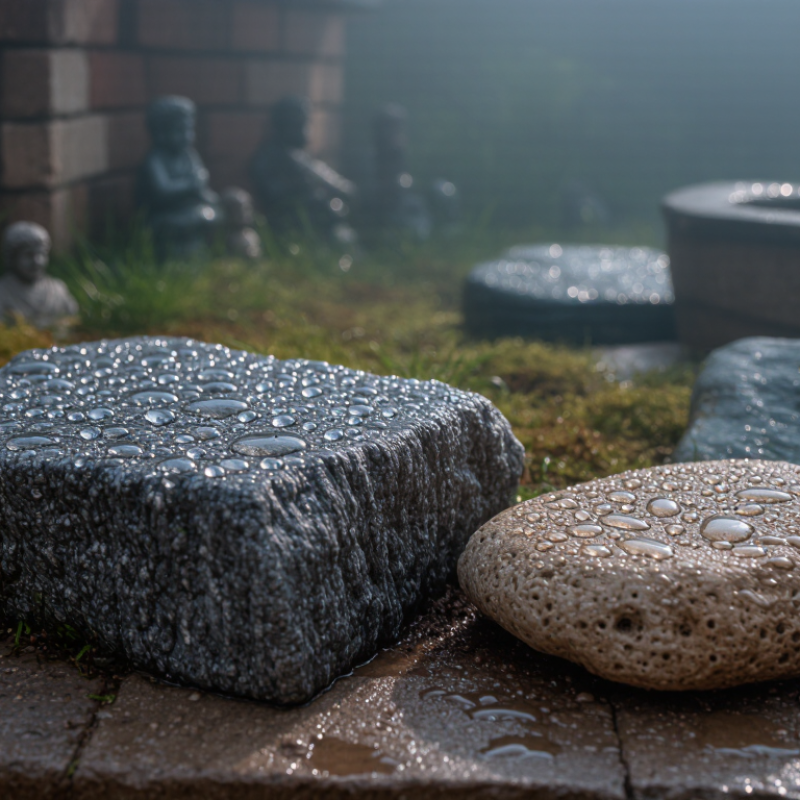
Stone “sweating” usually means moisture has appeared on its surface. It does not mean the stone produces water. Most often, warm, humid air touches a cooler stone and forms tiny droplets. This is ordinary condensation, similar to water forming on a chilled glass.
Temperature matters greatly. A basement wall may feel cold after rain, while indoor air remains warm and damp. When that air reaches the stone, its moisture changes into visible beads. Smooth, dark surfaces make the droplets easier to notice. It looks mysterious. The science is simple.
Porous stones can behave differently. Limestone, sandstone, and some concrete-like materials may absorb groundwater through microscopic openings. This moisture can slowly move upward or outward through capillary action. Salts may travel with it and leave white, powdery marks after evaporation. A damp patch that returns in the same location deserves closer attention.
In practice, I would check the air humidity, nearby plumbing, recent rainfall, and the stone’s temperature before judging the cause. A clean tissue can reveal whether the surface is wet or merely cool. However, this quick test is not definitive. I once mistook condensation for a leaking joint because the droplets appeared below a window. The real issue was poor ventilation.
Persistent moisture may weaken mortar, stain the stone, or encourage surface growth. Photographing the area over several days helps reveal patterns. Professional moisture testing is sensible when dampness spreads, smells unusual, or damages adjacent materials.
