China’s top ten stone types reveal why natural materials continue to command attention. Marble, granite, limestone, travertine, slate, sandstone, quartzite, basalt, onyx, and soapstone each show different colors, textures, and geological histories. A marble slab may carry fine veins like ink in water. Granite may display crystals formed deep beneath the earth. These details cannot be perfectly repeated by a factory.
Why is natural stone more expensive than man-made stone? The answer involves more than appearance. Quarrying requires careful extraction, heavy equipment, skilled workers, and strict quality control. Large blocks can crack during cutting. Some slabs are lost before reaching the showroom. Transportation adds another cost, especially when stone travels from China to overseas projects.
Jim Hieb, a former executive director of the Natural Stone Institute, has said, “Natural stone is a natural product, and no two pieces are exactly alike.” That difference creates value, but it also creates uncertainty. A customer may select a sample and receive a slab with stronger veining than expected.
Craftsmanship matters, too. Workers must inspect, cut, polish, seal, and install each piece carefully. Mistakes can damage an expensive slab. Man-made stone usually offers more consistent patterns and predictable sizing. It can be practical, but it may lack natural variation.
Still, natural stone is not automatically the better choice. Budget, maintenance, location, and design goals should guide the decision. Price reflects rarity and labor, not guaranteed perfection. That distinction deserves honest consideration.
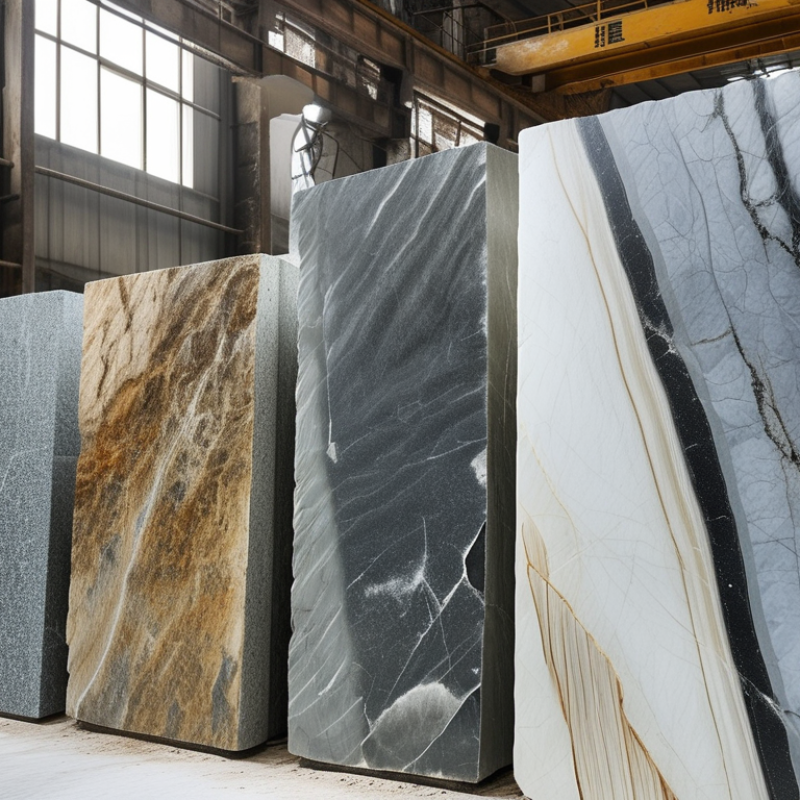
China’s top 10 natural stone types are defined by more than color or popularity. Granite, marble, limestone, sandstone, slate, basalt, travertine, quartzite, onyx, and serpentine represent different geological histories. Their value depends on mineral structure, block size, pore volume, water absorption, strength, and surface response. A white marble with fine crystals may suit a lobby, while dense granite performs better on outdoor paving.
The 2024 USGS Mineral Commodity Summaries identifies dimension stone as a material judged through physical properties, quarry output, and processing quality. UN Comtrade data also shows China’s strong role in worked-stone trade, but export volume does not prove superior quality. Quarry location matters. Stable benches produce larger slabs and fewer repairs. The China Stone Material Association has repeatedly emphasized testing, grading, and processing consistency in industry guidance. These details help explain why natural stone costs more. The stone is limited by nature, not factory scheduling. A ranking is never absolute. Regional supply can change it.
Tips: Ask for a recent test report. Check water absorption, flexural strength, abrasion resistance, and freeze-thaw performance. View several slabs under the intended lighting. Vein movement can be beautiful, but it can also increase cutting waste. I would not select from a small sample alone. Calibration, resin treatment, finish, packaging, and installation can also change the final price. The cheapest quotation may hide higher waste or maintenance costs.
A practical comparison of widely traded Chinese natural stone categories. Trade codes are commonly used identifiers, while quarry characteristics, grading, processing, and logistics can vary by source.
| No. | Natural Stone Type | Geological Class | Commonly Associated Chinese Production Area | Typical Appearance | Approx. Mohs Hardness | Typical Water Absorption | Common Applications | Main Factors That Increase Cost |
|---|---|---|---|---|---|---|---|---|
| 1 | G603 Sesame White Granite Trade code: G603 |
Granite | Fujian Province | Light grey to white background with fine, evenly distributed dark mineral grains. | 6–7 | Approx. 0.2–0.6% | Exterior paving, kerbs, stairs, wall cladding, countertops, and architectural landscaping. | Uniform color selection, large block availability, low-defect slabs, thicker dimensions, precision cutting, surface finishing, and long-distance delivery. |
| 2 | G654 Dark Grey Granite Trade code: G654 |
Granite | Fujian Province | Medium to dark grey, usually fine- to medium-grained, with a consistent salt-and-pepper texture. | 6–7 | Approx. 0.2–0.7% | Outdoor paving, curbs, steps, façades, memorial work, and high-traffic flooring. | Dark-tone consistency, flame or bush-hammered finishes, anti-slip surface treatment, tight tolerances, and selection of blocks with minimal veins or color variation. |
| 3 | G682 Rust Yellow Granite Trade code: G682 |
Granite | Fujian Province | Warm yellow, golden, or rusty background with darker mineral speckles and occasional natural variation. | 6–7 | Approx. 0.2–0.8% | Garden paving, exterior walls, steps, columns, landscape features, and split-face cladding. | Matching yellow tone across multiple slabs, control of iron-related staining, selected blocks, textured finishing, edge fabrication, and weather-resistant treatment. |
| 4 | G633 Pink Granite Trade code: G633 |
Granite | Fujian Province | Pink to salmon background with black, grey, and lighter feldspar crystals. | 6–7 | Approx. 0.2–0.7% | Wall cladding, paving, stairs, monuments, landscaping, and interior feature surfaces. | Color sorting, waste caused by irregular crystal distribution, book-matched or large-format fabrication, custom profiles, polishing, and installation complexity. |
| 5 | G684 Black Granite Trade code: G684 |
Fine-grained black granite or basaltic stone commonly sold under a granite trade category | Fujian Province | Deep black to charcoal surface with a fine, compact texture; finish strongly affects its visual depth. | 6–7 | Approx. 0.1–0.6% | Premium paving, flooring, countertops, staircases, façades, monuments, and landscape elements. | Demand for uniform deep-black material, careful polishing, resin treatment, surface protection, limited defect-free blocks, and high rejection rates during visual grading. |
| 6 | G687 Peach Red Granite Trade code: G687 |
Granite | Fujian Province | Peach, pink, or reddish background with darker grey and black mineral grains. | 6–7 | Approx. 0.2–0.8% | Exterior cladding, paving, stair treads, memorial applications, landscaping, and decorative wall panels. | Stable red or peach coloration, block size, low fissuring, waste during gang-sawing, flame finishing, custom thickness, and project-specific color matching. |
| 7 | G664 Sesame Grey Granite Trade code: G664 |
Granite | Fujian Province | Grey to silver-grey background with medium-grained black and light mineral particles. | 6–7 | Approx. 0.2–0.8% | Flooring, paving, stairs, wall cladding, countertops, and commercial building exteriors. | Consistent grain pattern, calibrated thickness, high-quality polishing, low-defect selection, cut-to-size fabrication, packaging, and transportation weight. |
| 8 | Chinese White Marble | Metamorphic carbonate rock | Several Chinese marble-producing regions, including areas in Sichuan and other provinces | White to ivory background; may contain subtle grey veining, crystalline texture, or localized tonal variation. | 3–4 | Approx. 0.1–0.8% | Interior wall panels, flooring, stairs, columns, sculptures, furniture tops, and decorative details. | Whiteness and vein selection, large unbroken blocks, low iron staining, resin filling, polishing, water-repellent treatment, fragile handling, and high slab rejection rates. |
| 9 | Shanxi Black Marble | Metamorphic carbonate rock | Shanxi Province | Black to very dark grey with a relatively fine texture; some grades show subtle lighter veining. | 3–4 | Approx. 0.1–0.6% | Interior flooring, wall cladding, thresholds, countertops, monuments, lettering, and decorative trim. | Deep and uniform black color, crack-free blocks, resin treatment, precision edge work, mirror polishing, protection against scratching, and careful packaging. |
| 10 | Guangxi White Marble | Metamorphic carbonate rock | Guangxi Zhuang Autonomous Region | White, cream, or light grey marble with variable crystalline texture and natural veining. | 3–4 | Approx. 0.2–1.0% | Interior floors, feature walls, staircases, vanity tops, columns, decorative carving, and architectural details. | Whiteness, vein continuity, block recovery, large-format slab production, resin reinforcement, polishing quality, edge fabrication, and protection from staining. |
Quarry layers can change color, grain, crystals, and veining. A small sample may look uniform. A full shipment may not.
Dense granite usually performs well outdoors. Dark, fine-grained materials can handle frequent foot traffic. Confirm slip resistance and water absorption first.
Marble can create a bright, refined surface. It needs sealing and gentle cleaning. Acidic spills may leave dull marks.
Request recent quarry samples and calibrated dimensions. Review absorption data, slip-resistance results, edge quality, and repair areas. Old samples can mislead.
Extraction begins with surveying fractures, color, and block size. Cutting can create unusable fragments. Freight, packaging, insurance, and local delivery add cost.
Yield loss often ranges from 20% to 40%. Cracks and required slab dimensions affect the result. Exact percentages remain uncertain.
The route may include trucks, vessels, ports, and local delivery. Handling, breakage protection, and storage financing increase landed cost. Estimates can be too optimistic.
Not always. Polished surfaces show scratches more easily on some dark stones. Honed finishes can hide minor marks, but they may look less reflective.
China’s top 10 natural stone types are defined by their geological origin, mineral composition, color, texture, hardness, and performance in real-world applications. Each type offers distinct features, from dramatic veining and rich color variation to high durability, slip resistance, and weather tolerance. The article explains how these stones are carefully quarried, cut, polished, finished, inspected, and supplied, with every stage affecting consistency, appearance, availability, and final cost.
Why is natural stone more expensive than man-made stone? Natural stone requires extraction from limited geological deposits, specialized equipment, skilled processing, careful selection, and transportation of heavy materials. Unlike manufactured alternatives, each slab is naturally unique, and matching colors or patterns may require additional sorting and waste. Although the initial price can be higher, natural stone may provide long-term value through durability, repairability, timeless appearance, and strong performance. Comparing quality, intended application, maintenance needs, lifespan, and overall project requirements helps buyers choose the most suitable stone rather than focusing only on the purchase price.

 Aura Stone