Large format porcelain tiles can transform a wall into a calm, almost continuous surface. Fewer grout joints create a cleaner appearance. They also make small rooms feel more open. Yet their size introduces practical risks. Handling, alignment, substrate preparation, and adhesive coverage demand careful planning.
Scott Carothers, a respected tile-installation educator and executive director of the Ceramic Tile Education Foundation, says, “The larger the tile, the flatter the substrate needs to be.” That principle shapes every reliable answer to “How to install large format porcelain tiles on walls.” A wall may look smooth under ordinary lighting, but a long tile can expose slight waves immediately. Even a small hollow behind the tile can create weakness, movement, or cracking.
This guide explores why homeowners and professionals choose large format porcelain for walls. It also considers the less glamorous details, including wall flatness, tile weight, movement joints, cutting, back-buttering, and temporary support. Properly selected mortar and consistent coverage matter. So does checking the manufacturer’s instructions, because products and installation limits differ.
The process is not effortless. Not even close.
Experienced installers often use leveling systems, strong suction handles, and a second person for positioning. Still, tools cannot correct a poorly prepared wall. That is where many attractive projects become expensive repairs. Readers should treat this article as practical guidance, not a substitute for site-specific assessment by a qualified tile professional. Every wall tells a slightly different story.
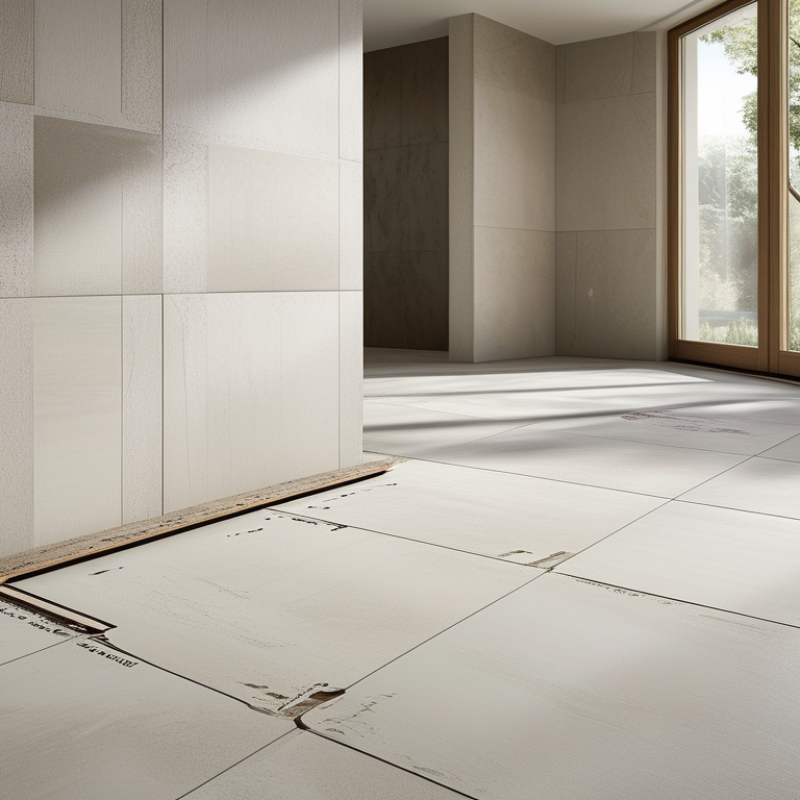
Large-format porcelain tiles are not simply oversized ceramic pieces. The term usually describes slabs or tiles with at least one unusually long side. Exact sizes vary by market and manufacturer. Porcelain is made from refined clay and fired at very high temperatures. This creates a dense body with very low water absorption, often below 0.5% under common industry testing. It can resist stains, moisture, and everyday abrasion when installed correctly. Its surface may resemble stone, concrete, fabric, or plaster.
On walls, fewer joints create a quieter visual field. A shower wall can look almost continuous around taps and corners. Small rooms may also feel less interrupted. Large panels are heavy, though. Handling usually requires suction lifters, edge protection, and trained installers. The wall must be flat, sound, and strong enough for the complete tile system. Uneven plaster can create hollow spots or stress the panel. That detail is easy to miss.
Before installation, check panel weight, adhesive compatibility, movement joints, and local requirements. A qualified tile professional should inspect the substrate and plan cuts around outlets, niches, and plumbing. I have seen attractive layouts fail because openings were measured after delivery. Dry-laying and templating reduce that risk, but they cannot remove it. Porcelain is durable, not indestructible. A sharp impact can still chip an exposed corner. Good planning matters as much as the tile itself.
| Data Dimension | Typical Information | Why It Matters for Wall Installation |
|---|---|---|
| Material Definition | Porcelain tile is a dense ceramic tile made from refined clay and other mineral materials, pressed and fired at high temperatures. | The dense body provides strong dimensional stability and makes the material suitable for demanding interior and exterior applications when the installation system is correctly selected. |
| Water Absorption | Not more than 0.5% for porcelain tile under ISO 13006 and ASTM C373 classifications. | Low water absorption helps limit moisture penetration, making porcelain suitable for bathrooms, shower walls, kitchens, and other humid areas. |
| Common Large-Format Sizes | Common market formats include approximately 600 × 1200 mm, 750 × 1500 mm, 900 × 1800 mm, and slab formats around 1200 × 2400 mm or larger. Available sizes vary by manufacturer and production line. | Larger panels can cover more wall area with fewer joints, creating a cleaner visual appearance and reducing the number of grout lines that require maintenance. |
| Typical Thickness | Approximately 3–6 mm for lightweight panels and about 6–12 mm for many standard large-format wall and floor products. The appropriate thickness depends on the product and application. | Thinner panels can reduce weight but generally require more careful handling and a flatter substrate. Thicker tiles may offer greater rigidity but add load to the wall. |
| Approximate Weight | A 1200 × 2400 mm panel at 6 mm thickness may weigh roughly 40–45 kg, depending on density and construction. Actual product weight must be checked in the technical data sheet. | Wall structure, adhesive coverage, handling equipment, and installer access should be assessed before selecting a large panel. |
| Visual Continuity | Large formats can reproduce the appearance of stone, concrete, terrazzo, or other surfaces across broad areas with fewer interruptions. | Fewer joints can create a spacious, continuous wall design and help emphasize the scale of a room. |
| Grout Joint Reduction | The number of grout lines depends on the tile layout, room dimensions, movement joints, and required installation clearances. | Fewer grout joints can reduce visible dirt accumulation and simplify routine cleaning, although joints are still required where specified by standards and the installation system. |
| Surface Maintenance | Porcelain has a hard, non-porous surface when properly manufactured and installed. Routine care commonly involves removing dust and cleaning with a suitable neutral cleaner. | The surface is generally easy to maintain on wall areas, especially where fewer grout joints are present. Cleaning products should follow the tile and grout manufacturers' instructions. |
| Stain Resistance | Low-absorption porcelain surfaces generally resist many common household stains, but textured, polished, and unglazed finishes can require different cleaning procedures. | Appropriate finish selection helps maintain appearance in kitchens, bathrooms, commercial interiors, and high-use wall areas. |
| Thermal and Moisture Stability | Porcelain is non-combustible and remains stable across normal indoor temperature and humidity changes, subject to the limitations of the installation system. | It can be used near many wet-area and heat-exposed applications when substrate preparation, movement accommodation, and product suitability are properly addressed. |
| Substrate Flatness | Large-format tile requires a clean, sound, and sufficiently flat substrate. The exact flatness tolerance depends on the tile size, tile standard, and installation method. | Uneven walls can create lippage, hollow spots, excessive adhesive variation, or tile breakage. Wall correction should be completed before tiling rather than relying on adhesive to level the surface. |
| Installation Coverage | Large panels are commonly installed with full adhesive coverage using methods such as back-buttering and appropriate notched-trowel application, as required by the project specification. | Consistent support helps reduce voids behind the tile and improves resistance to cracking, movement, and impact after installation. |
| Handling Requirements | Large-format panels are more flexible and more difficult to maneuver than smaller tiles. Carrying frames, suction handles, multiple installers, or mechanical lifting tools may be required. | Proper handling reduces the risk of edge damage, corner breakage, personal injury, and installation defects. |
| Cutting and Edge Finishing | Large panels typically require suitable scoring, cutting, drilling, and edge-finishing equipment. Openings for outlets, pipes, and fixtures must be accurately measured. | Careful planning helps minimize waste and produces cleaner transitions around corners, niches, doors, windows, and plumbing fixtures. |
| Movement Joints | Perimeter gaps and movement joints are part of a complete tile assembly. Their placement depends on the substrate, room dimensions, exposure, and applicable installation standards. | Movement accommodation helps manage expansion, contraction, building movement, and stress that could otherwise lead to cracking or debonding. |
| Recommended Wall Uses | Common uses include bathroom walls, shower surrounds, kitchen backsplashes, feature walls, lobby walls, fireplace surrounds, and selected exterior wall systems. | The low-absorption surface, broad design scale, and reduced joint layout make large-format porcelain practical for both decorative and functional wall applications. |
| Main Limitation | Large-format porcelain is heavier, less forgiving of substrate irregularities, and more demanding to cut and install than smaller tile. | A qualified installer should verify product suitability, wall capacity, adhesive compatibility, substrate condition, and local installation requirements before work begins. |
: The wall should be sound, clean, dry, and very flat. Use a long straightedge to find small humps and dips. Small errors matter.
Use a continuous waterproofing system suitable for the wall and room. Seal pipe penetrations carefully because water often enters neglected details. Corners need attention.
Plan around corners, outlets, and visible edges before cutting. Dry-lay the pieces to identify narrow slivers and awkward joins. They can look poor.
Use two trained installers, lifting frames, and suction handles. Large pieces are heavy and can crack when poorly supported. Do not rush.
Use adhesive suitable for porcelain and the wall conditions. Apply it evenly, then back-butter the tile to reduce empty spaces. Avoid random adhesive spots.
They allow minor building movement without forcing the tile surface to crack. Follow the recommended joint widths and room conditions. Rigid edges can fail.
Remove dust with a soft microfiber cloth before adding water. Use warm water and a pH-neutral cleaner for routine cleaning. Dry the surface afterward.
Avoid abrasive powders, steel wool, and strong acids. They may dull the finish or damage nearby grout. Test unfamiliar cleaners privately.
Inspect grout every few months for cracks, loose areas, or lasting dampness. Keep flexible corner joints intact and replace split sections promptly. Small repairs help.
I once trusted a nearly flat wall, but side lighting exposed uneven tile edges. I would now spend longer correcting the substrate. Delays can prevent rework.
Large format porcelain tiles are oversized, durable surfaces made from densely pressed porcelain, offering a clean appearance with fewer grout lines than smaller tiles. On walls, they provide excellent resistance to moisture, stains, scratches, heat, and everyday wear, making them suitable for bathrooms, kitchens, shower areas, living spaces, and commercial interiors. Their broad surfaces can also create a spacious, continuous visual effect while reducing grout maintenance.
Before installation, the wall must be structurally sound, flat, clean, dry, and properly prepared to support the tile’s weight. The installation process should include accurate measuring, careful cutting, suitable tile adhesive, proper back-buttering, leveling systems, and secure support during curing. Understanding how to install large format porcelain tiles on walls helps prevent lippage, cracking, and bonding problems. Once installed, these tiles are easy to maintain with regular dust removal, a soft cloth or mop, and a pH-neutral cleaner. Promptly removing spills and inspecting grout joints can help preserve their appearance and performance for years.

 Aura Stone