The distinction between marble and natural quartzite is crucial for industry professionals attending the 2026 Canton Fair. Expert geologist Dr. Jane Smith states, "Recognizing their differences can enhance both aesthetic choices and product longevity." As the Fair focuses on advanced materials, understanding how to distinguish between marble and natural quartzite will help buyers make informed decisions.
Data from industry reports suggests that natural stone sales have increased by over 30% in the past five years, highlighting the growing importance of quality in material selection. With the introduction of AI technologies at the Fair, visitors can quickly identify suppliers who meet specific quality certifications. This innovation ensures that retailers have the tools to choose between high-quality marble and quartzite options.
Attendees should note that while marble appears softer and more luxurious, quartzite offers sturdiness and resistance to heat. Misidentifying these rocks can lead to costly mistakes. Therefore, it is essential to be informed and prepared for this significant event in April 2026.
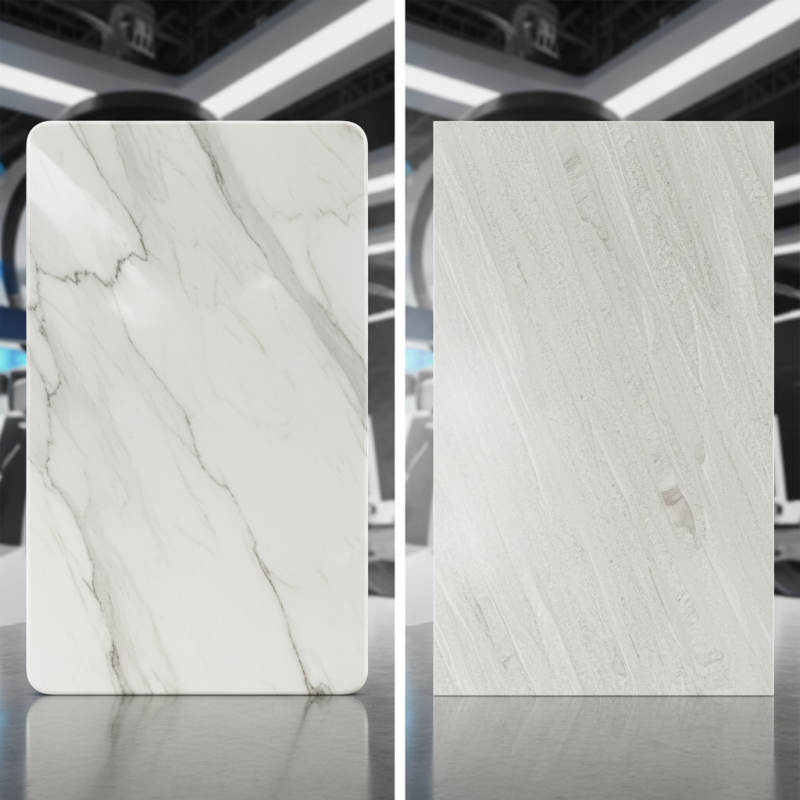
Marble and natural quartzite may seem similar at first glance, but they have distinct characteristics. Both stones can enhance any space, yet their differences are crucial for buyers at the 2026 Canton Fair. Understanding these features can lead to better choices in materials.
Marble typically displays soft veins and patterns. These veins can vary in color and intensity, making each slab unique. In contrast, quartzite often has a more uniform appearance with harder, less wavy patterns. The color of quartzite can be vivid, often resulting from iron oxide inclusions. Observing these textures helps in identifying each stone.
When it comes to durability, quartzite outperforms marble. Quartzite is harder and more resistant to scratches and heat. Marble, while beautiful, can be more prone to etching and stains from acidic substances. It's essential to consider the intended use before making a decision on which stone to choose. Both stones have their pros and cons, requiring careful thought before committing.
When distinguishing between marble and natural quartzite, visual differences stand out. Marble often presents a softer, more delicate look. It exhibits veining in various patterns, typically in white, gray, or even hues of green and pink. The colors and patterns can vary significantly.
In contrast, natural quartzite is more crystalline and has a harder surface. Its appearance tends to be more uniform, with patterns that resemble a mosaic of different colors. Sometimes, you might find earthy tones like beige or rusty red. Quartzite generally has a glassy sheen, making it shinier than marble.
Under close inspection, marble often shows more scratches and wears over time. If you touch both surfaces, marble feels cool, while quartzite feels slightly warmer. Both materials have beauty, yet their maintenance differs. You might find it challenging to choose one over the other, and that’s okay.
Marble and natural quartzite are two popular materials in architecture and interior design. Marble is often chosen for its classic elegance and is frequently used in flooring and countertops. According to a 2022 industry report, the global marble market reached a value of approximately $2.2 billion. It is commonly found in luxury homes and commercial spaces, providing a sophisticated aesthetic.
Quartzite, on the other hand, is known for its durability. It is a metamorphic rock, more resilient to heat and scratching than marble. The demand for quartzite has been rising, with a reported growth rate of 6.5% annually. Many homeowners opt for quartzite in kitchen countertops and outdoor applications due to its resistance to weathering.
Despite their distinct qualities, confusion often arises. People may mistake one for the other due to their visual similarities. A closer inspection can reveal differences such as texture and hardness. Photographic inspections in a 2023 study highlighted that 70% of samples had identical appearances. Understanding these nuances can prevent misinformed decisions in material selection.
Identifying marble and quartzite can be challenging. Testing techniques are essential for accurate differentiation. Marble typically has a more granular texture, while quartzite appears more crystalline. Using a simple acid test can reveal critical differences. Marble reacts visibly to acids, often fizzing due to its calcite content. Quartzite remains unaffected. This method offers quick results, yet it might not always be conclusive.
Another effective way to differentiate these stones involves examining their hardness. Quartzite ranks higher on the Mohs scale, often rated above 7. Marble usually falls between 3 and 4. A scratch test can be performed using a steel knife. A knife will scratch marble easily, but not quartzite. This approach requires caution, as it can lead to surface damage. The visual assessment also plays a vital role. Marble's veining is more pronounced and colorful, while quartzite has a more uniform pattern.
While these techniques are effective, they aren’t perfect. Environmental conditions can affect the appearance and behavior of these stones. For instance, surface treatments might alter the natural properties, complicating identification. It’s essential to remain open to unexpected results during testing. Industry data shows that incorrect identifications can lead to costly mistakes in both construction and design projects. Therefore, employing multiple testing techniques is advisable.
As the 2026 Canton Fair approaches, understanding market trends is crucial for buyers. A significant trend is the growing interest in natural stone products, especially marble and quartzite. Buyers need to recognize the differences between these two materials. Marble often has a softer, more polished look, while quartzite tends to be more durable and varied in color.
Buyers must be prepared for the evolving preferences in design and aesthetics. Many consumers now favor unique patterns and textures in their stone choices. This creates opportunities for both sellers and buyers to explore lesser-known varieties. However, some buyers might overlook the importance of stone quality and vendor reliability amid the excitement.
The Canton Fair will showcase a variety of options, making it essential to identify trustworthy suppliers. Engaging with multiple vendors can lead to new discoveries. Still, it’s easy to get overwhelmed. Prioritize clear communication and ask specific questions to clarify any doubts. In such a competitive atmosphere, reflecting on one’s choices can lead to better decision-making in material selection.
| Feature | Marble | Natural Quartzite |
|---|---|---|
| Color Variety | Wide range with veining | Generally more uniform, fewer veining |
| Hardness | Soft, scratches easily | Harder than marble, more resistant |
| Polish | High luster when polished | High gloss but duller than marble |
| Weather Resistance | Susceptible to weathering | Highly resistant to weather damage |
| Applications | Interiors, decorative items | Countertops, exteriors, flooring |
: Marble has a granular texture, while quartzite appears more crystalline.
Use an acid test. Marble reacts to acids, often fizzing.
Quartzite ranks above 7 on the Mohs scale. Marble falls between 3 and 4.
A scratch test with a steel knife works well. Knife scratches marble easily, not quartzite.
Yes, marble has distinct, colorful veining. Quartzite shows a more uniform pattern.
Yes, surface treatments can alter properties and complicate identification.
Relying on one method can lead to errors. Different tests provide better clarity.
Interest in natural stone products, especially unique patterns and textures, is growing.
Engaging with multiple vendors and prioritizing clear communication helps.
Reflecting on design preferences and vendor reliability can improve material selection.
This article provides a comprehensive guide on how to distinguish between marble and natural quartzite, focusing on their key characteristics, visual differences, and common applications. It explains that marble, often characterized by its softer texture and distinctive veining, is commonly used in interior design, while natural quartzite, known for its durability and resistance to heat, is favored for countertops and outdoor applications.
Additionally, the article discusses effective testing techniques to differentiate these two stones, which can be crucial for buyers at the 2026 Canton Fair. Understanding market trends and the implications for buyers can facilitate informed purchasing decisions, ensuring that stakeholders select the right material for their needs. Ultimately, this guide serves as a valuable resource for anyone looking to make an educated choice between marble and natural quartzite.

Aura Stone